
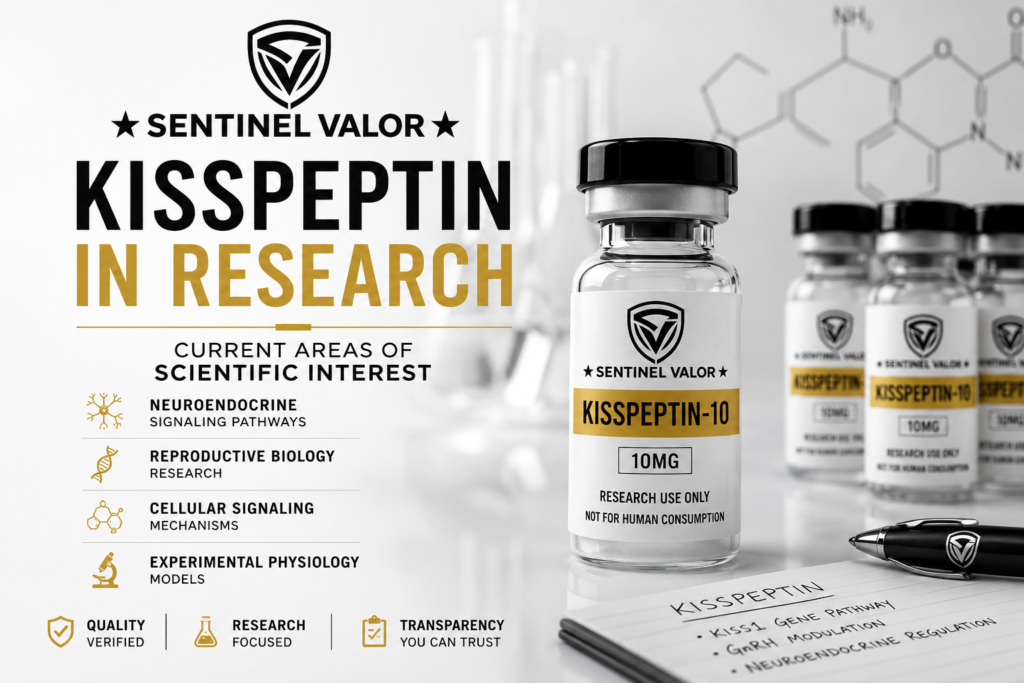
Kisspeptin in Research: Current Areas of Scientific Interest
KissPeptin 5MG | Research Peptide | High Purity has become an increasingly discussed compound within research communities due to its involvement in signaling pathways associated with hormonal regulation and physiological communication systems.
Interest in Kisspeptin research has expanded as investigators continue exploring its broader role within laboratory models and experimental environments.
This article provides a high-level overview of current scientific interest surrounding Kisspeptin.
What Is Kisspeptin?
Kisspeptin refers to a family of signaling peptides encoded through the KISS1 gene pathway.
Research has examined Kisspeptin interactions with receptors involved in neuroendocrine communication and regulatory pathways.
Its discovery has led to expanding scientific investigation across multiple fields.
Areas of Research Interest
Current literature has explored Kisspeptin within areas including:
- Neuroendocrine signaling pathways
- Hormonal communication systems
- Reproductive biology research
- Cellular signaling mechanisms
- Experimental physiology models
Research continues to evaluate these relationships within controlled laboratory settings.
Why Researchers Are Paying Attention
Growing scientific attention toward Kisspeptin stems from its broad signaling involvement and potential relevance within multiple physiological systems.
Ongoing studies continue investigating pathway interactions and regulatory mechanisms.
As additional literature becomes available, research interest may continue expanding.
Research Documentation & Quality Considerations
As with all laboratory materials, documentation remains important.
Researchers commonly review:
- Batch tracking
- COA documentation
- Purity testing references
- Analytical records
- Storage practices
Maintaining documentation supports consistency and traceability.
Final Thoughts
Kisspeptin remains an area of growing scientific interest due to its role in signaling and regulatory pathways.
As research evolves, continued investigation may provide additional insight into its broader laboratory relevance.
For Research Use Only. Not For Human Consumption.