
How to Read a COA (Certificate of Analysis) for Research Compounds
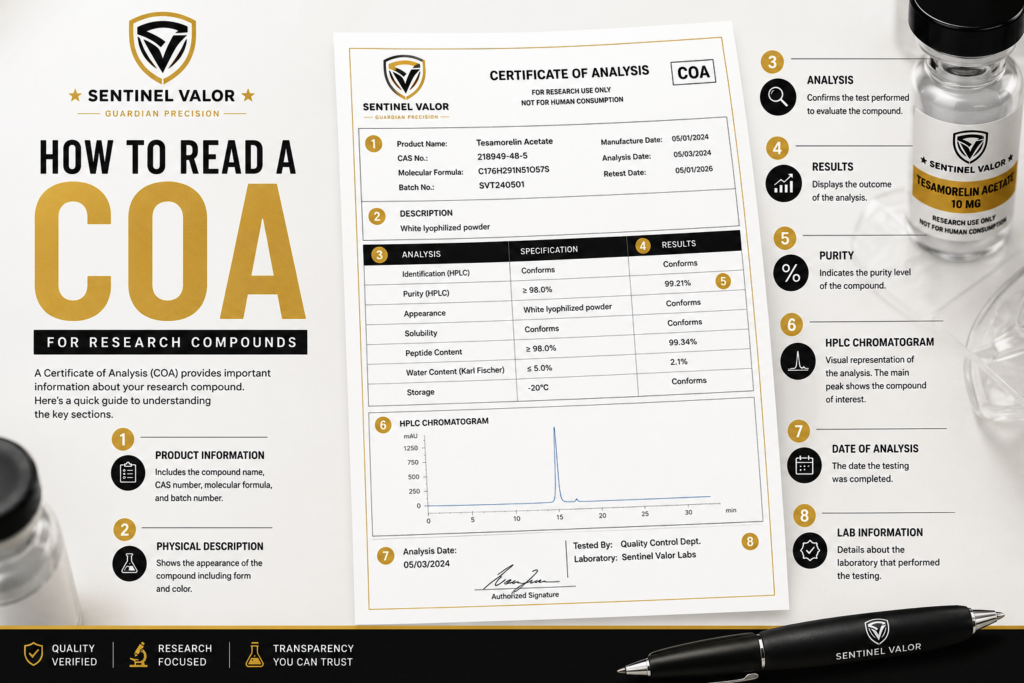
When working with research compounds, understanding a Certificate of Analysis (COA) is essential. A COA provides detailed information about the identity, purity, and quality of a substance—helping ensure consistency and reliability for research purposes.
In this guide, we’ll break down how to read a COA and what to look for when evaluating a product.
What is a COA?
A Certificate of Analysis is a document issued by a laboratory that verifies the composition and quality of a substance. It typically includes test results, methods used, and confirmation that the material meets specified standards.
For research compounds, a COA acts as a transparency tool—allowing you to verify what you’re working with.
Key Sections of a COA
1. Compound Identification
This section confirms:
- Name or code of the compound
- Batch or lot number
- Date of analysis
Why it matters:
It ensures the document matches the exact batch you received.
2. Purity Level (%)
One of the most important parts of a COA.
- Often listed as a percentage (e.g., 98.5%)
- Indicates how much of the sample is the intended compound
What to look for:
Higher purity generally means fewer impurities, which supports more consistent research outcomes.
3. Analytical Methods
Common testing methods include:
- HPLC (High-Performance Liquid Chromatography)
- Mass Spectrometry
- NMR (Nuclear Magnetic Resonance)
Why it matters:
These methods confirm identity and purity using standardized scientific techniques.
4. Impurity Profile
Some COAs list:
- Individual impurities
- Total impurity percentage
What to look for:
A clear breakdown shows transparency and proper testing.
5. Appearance Description
Describes physical characteristics such as:
- Color
- Form (powder, crystalline, etc.)
Why it matters:
Helps confirm consistency between batches.
6. Laboratory Information
Includes:
- Name of testing lab
- Contact information
- Sometimes accreditation details
Tip:
Third-party labs add an extra layer of trust.
Red Flags to Watch For
Not all COAs are created equal. Be cautious if you see:
- Missing batch numbers
- No testing method listed
- No lab information
- Extremely vague or generic results
These may indicate incomplete or unreliable testing.
Why COAs Matter for Research
COAs provide:
- Verification of compound identity
- Confidence in purity levels
- Consistency across batches
For any research application, having access to clear and accurate documentation is a key part of maintaining quality standards.
Final Thoughts
Understanding how to read a COA allows you to make more informed decisions when sourcing research materials. Taking the time to review these documents can significantly improve confidence in your research process.
Disclaimer
All products referenced are intended strictly for research purposes only and are not for human consumption.