
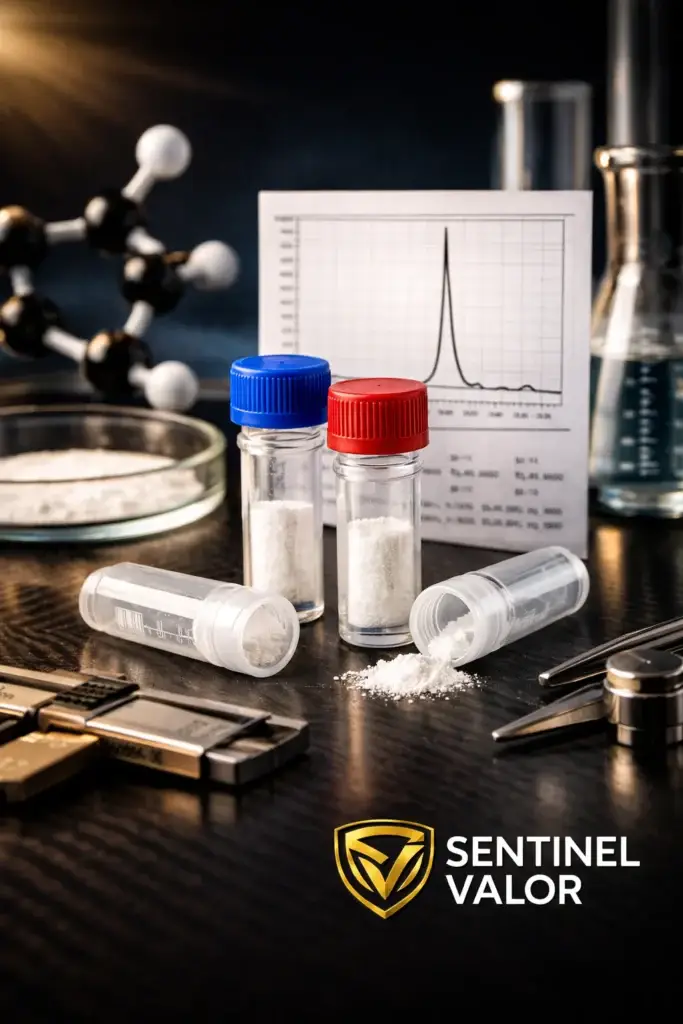
When sourcing research peptides, purity is one of the most commonly referenced specifications. You’ll often see compounds listed as 95%, 98%, or 99% purity, but understanding what those numbers actually represent is important for maintaining consistency in research environments.
This guide explains peptide purity, how it’s measured, and why it matters when selecting research materials.
What Is Peptide Purity?
Peptide purity refers to the percentage of the desired peptide sequence compared to other minor byproducts remaining from synthesis.
For example:
- 99% purity = 99% target peptide, 1% minor impurities
- 98% purity = 98% target peptide, 2% minor impurities
- 95% purity = 95% target peptide, 5% minor impurities
These impurities are typically shorter amino acid fragments or incomplete sequences produced during synthesis.
While small, these differences can impact research consistency and repeatability.
How Peptide Purity Is Measured
Purity is most commonly determined using analytical testing methods such as:
- High Performance Liquid Chromatography (HPLC)
- Mass Spectrometry (MS)
- Analytical Chromatography
HPLC testing separates compounds within a sample and measures how much of the material matches the intended peptide sequence.
This is why many research suppliers provide Certificate of Analysis (COA) documentation with chromatogram results.
Does Higher Purity Always Matter?
Higher purity typically helps reduce unknown variables in research settings. Increased purity may provide:
- Improved consistency
- Reduced impurities
- Cleaner analytical results
- Better reproducibility
Common purity ranges seen in research environments:
- 95%+ — General research applications
- 98%+ — Most research applications
- 99%+ — High precision research environments
Selecting an appropriate purity level depends on the specific research goals.
Why Impurities Exist in Peptide Synthesis
Peptides are created using a step-by-step amino acid synthesis process. During this process:
- Some sequences may terminate early
- Small fragments may remain
- Trace synthesis byproducts may form
Purification removes most of these components, but achieving absolute 100% purity is extremely difficult. Because of this, purity ranges like 98%–99% are commonly referenced.
The Role of COA Testing
A Certificate of Analysis typically includes:
- Compound identification
- Purity percentage
- Testing method
- Batch or lot number
- Chromatogram data
- Laboratory information
COAs help support transparency and batch consistency in research materials.
Key Takeaways
- Purity reflects target peptide vs synthesis byproducts
- 98–99% purity is commonly referenced in research settings
- HPLC is the most common testing method
- COAs help verify purity results
- Higher purity may improve research consistency
Sentinel Valor Research Standards
At Sentinel Valor, transparency and consistency are prioritized across research materials. Providing clear documentation and maintaining structured sourcing practices helps support reliable research environments.
Research Use Notice
All materials referenced are intended for laboratory research purposes only.
Not for human consumption.
Not for medical, diagnostic, or therapeutic use.