
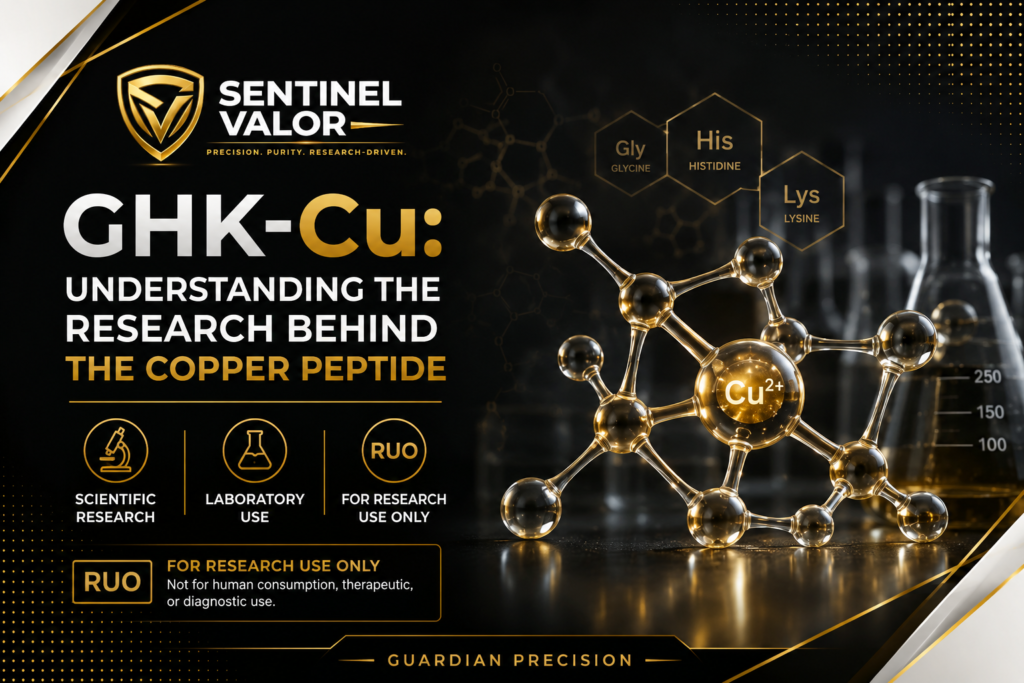
GHK-Cu: The Copper Peptide Generating Interest in Research
What Is GHK-Cu?
GHK-Cu (Glycyl-L-Histidyl-L-Lysine Copper) is a naturally occurring copper-binding peptide that has become a popular subject of scientific research. First identified in human plasma, GHK-Cu has been studied for decades due to its involvement in various biological processes and its ability to bind copper ions.
Researchers have investigated GHK-Cu in multiple laboratory settings, examining its interactions with cellular pathways, tissue signaling mechanisms, and protein expression.
The Structure of GHK-Cu
GHK-Cu consists of a three-amino-acid peptide sequence:
- Glycine (G)
- Histidine (H)
- Lysine (K)
When combined with copper ions, the complex forms GHK-Cu, which has demonstrated stability and biological activity in numerous research models.
Areas of Scientific Interest
Researchers have explored GHK-Cu in studies involving:
Cellular Signaling
Scientific literature suggests GHK-Cu may influence gene expression and cellular communication pathways. Researchers continue to investigate how these mechanisms function in controlled laboratory environments.
Tissue Research
GHK-Cu has been examined in studies involving extracellular matrix components, collagen-related pathways, and cellular regeneration processes. These investigations have contributed to ongoing scientific interest in the peptide.
Copper Transport
Copper is an essential trace mineral involved in numerous biological functions. GHK-Cu serves as a copper-binding peptide, making it a useful subject for researchers studying copper transport and utilization.
Gene Expression Studies
Several published studies have explored how GHK-Cu may influence the expression of specific genes associated with cellular maintenance and biological signaling.
Why Researchers Study GHK-Cu
Interest in GHK-Cu stems from its unique combination of:
- Naturally occurring peptide structure
- Strong copper-binding properties
- Extensive scientific literature
- Broad range of research applications
- Continued investigation across multiple biological fields
Its long history in scientific publications makes it one of the more widely recognized copper peptides in research environments.
Storage and Handling Considerations
Researchers typically store peptide products according to supplier recommendations to maintain stability and integrity. Proper handling procedures and laboratory best practices should always be followed.
GHK-Cu Research Products
Important Notice
FOR RESEARCH USE ONLY (RUO)
These products are not intended for human consumption, medical use, diagnosis, treatment, or prevention of any disease. Products are sold exclusively for legitimate laboratory research purposes.
Final Thoughts
GHK-Cu remains one of the most discussed copper peptides within the research community. As scientific understanding continues to evolve, researchers remain interested in exploring its properties, biological interactions, and potential applications within controlled laboratory settings.
Sentinel Valor is committed to providing high-quality research materials backed by transparency, integrity, and customer support.