
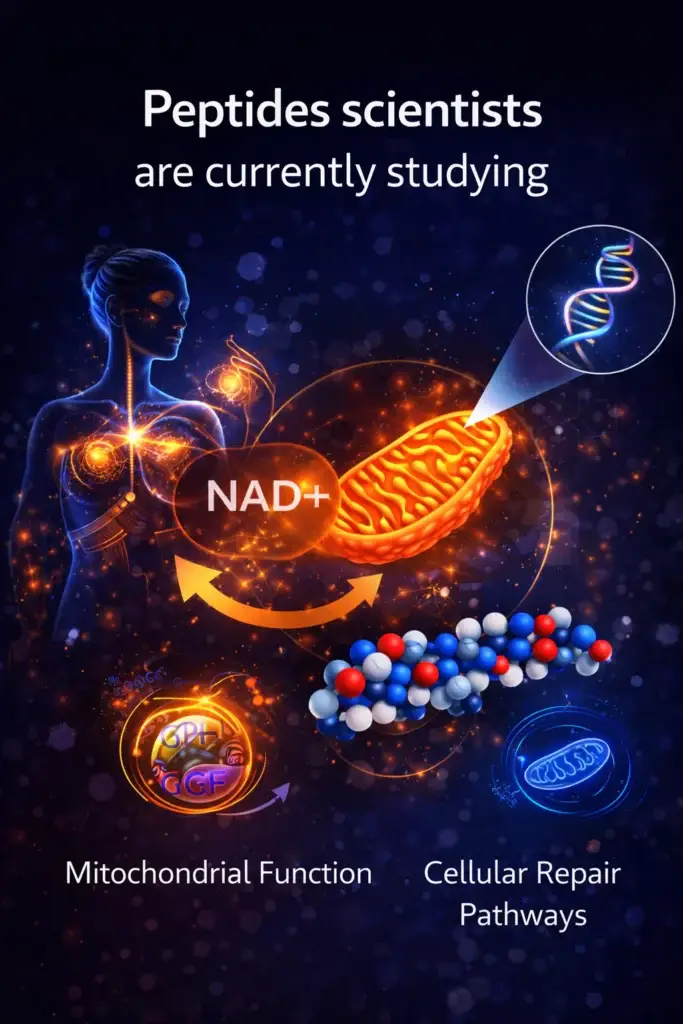
Nicotinamide adenine dinucleotide (NAD+) is an essential coenzyme found in all living cells. It plays a central role in cellular metabolism, energy production, and redox reactions that support normal biological function. Because of its importance in mitochondrial activity and metabolic pathways, NAD+ has become a major focus of scientific research.
Researchers study NAD+ in laboratory environments to better understand how cells generate energy, regulate metabolic processes, and respond to physiological stress. Investigations into NAD+ have also contributed to a broader understanding of mitochondrial biology and intracellular signaling networks.
What is NAD+?
NAD+ is a coenzyme derived from vitamin B3 (niacin) and exists in two primary forms within cells:
• NAD+ (oxidized form)
• NADH (reduced form)
These two forms function together as part of cellular redox reactions, allowing cells to transfer electrons during metabolic processes. This redox cycling is essential for energy production within mitochondria.
NAD+ participates in numerous enzymatic reactions, particularly those involved in:
• glycolysis
• the citric acid (Krebs) cycle
• oxidative phosphorylation
Through these processes, NAD+ helps convert nutrients into usable cellular energy in the form of ATP.
NAD+ and Mitochondrial Energy Production
Mitochondria are often referred to as the “powerhouses” of the cell because they generate the majority of ATP used for cellular activity. NAD+ plays a critical role in this process by acting as an electron carrier.
During metabolic reactions, NAD+ accepts electrons and hydrogen ions, converting into NADH. NADH then transports these electrons to the mitochondrial electron transport chain, where a series of biochemical reactions ultimately produce ATP.
Because of this role, NAD+ is considered an essential component of mitochondrial respiration and cellular energy metabolism.
NAD+ in Cellular Signaling Pathways
In addition to its metabolic role, NAD+ is also involved in several cellular signaling processes. Many enzymes rely on NAD+ as a substrate for regulatory activities that influence gene expression and cellular stress responses.
Important NAD+-dependent enzymes studied in laboratory research include:
• Sirtuins (SIRT proteins)
• Poly(ADP-ribose) polymerases (PARPs)
• CD38 enzymes
These enzymes participate in biological processes such as:
• DNA repair mechanisms
• regulation of gene expression
• cellular stress responses
• metabolic signaling pathways
Because of these diverse roles, NAD+ is frequently studied in biochemical research focused on cellular homeostasis and metabolic regulation.
NAD+ and Metabolic Research
Scientists also investigate how NAD+ availability influences metabolic activity within cells. Cellular NAD+ levels can fluctuate depending on nutrient availability, oxidative stress, and overall metabolic demand.
Research has examined how NAD+ participates in pathways related to:
• glucose metabolism
• lipid metabolism
• mitochondrial function
• cellular redox balance
Understanding these pathways helps researchers explore how cells maintain energy balance and adapt to changing environmental conditions.
NAD+ Precursors in Research
In laboratory studies, scientists often examine compounds known as NAD+ precursors. These molecules can be converted into NAD+ through metabolic pathways inside the cell.
Common NAD+ precursor molecules studied include:
• Nicotinamide (NAM)
• Nicotinic acid (NA)
• Nicotinamide riboside (NR)
• Nicotinamide mononucleotide (NMN)
Researchers analyze how these compounds influence NAD+ biosynthesis and cellular metabolic processes. This work contributes to a deeper understanding of cellular energy systems and metabolic regulation.
Scientific Importance of NAD+ Research
Because NAD+ participates in both metabolic reactions and cellular signaling pathways, it has become a central molecule in many areas of biological research.
Studies involving NAD+ help scientists investigate:
• mitochondrial biology
• cellular metabolism
• energy production systems
• intracellular signaling networks
• molecular responses to physiological stress
By examining these processes in controlled laboratory environments, researchers continue to expand scientific knowledge of how cells regulate energy and maintain metabolic stability.
Conclusion
NAD+ is a fundamental coenzyme involved in cellular metabolism and mitochondrial energy production. Its role in redox reactions, enzymatic regulation, and intracellular signaling makes it a key molecule in modern biochemical research.
Ongoing laboratory studies aim to better understand how NAD+ supports cellular energy systems and influences metabolic pathways. As research continues, scientists are gaining deeper insight into the complex mechanisms that allow cells to produce energy and maintain biological balance.
Related Research Articles
You may also be interested in these research topics:
• What Are Peptides? Understanding Their Role in Biological Research
• Growth Hormone Signaling: The GHRH–GH–IGF-1 Pathway
• BPC-157 Peptide Research: Cellular Regeneration Pathways
• TB-500 and Thymosin Beta-4 in Cell Migration Research
• MOTS-C: A Mitochondrial-Derived Peptide in Metabolic Signaling
Scientific References
The following peer-reviewed research and scientific literature provide background information related to NAD+ and mitochondrial metabolism:
1. Verdin E. “NAD+ in aging, metabolism, and neurodegeneration.” Science. 2015.
2. Cantó C, Menzies KJ, Auwerx J. “NAD+ metabolism and the control of energy homeostasis.” Cell Metabolism. 2015.
3. Rajman L, Chwalek K, Sinclair DA. “Therapeutic potential of NAD-boosting molecules.” Nature Reviews Molecular Cell Biology. 2018.
4. Ying W. “NAD+ and NADH in cellular functions and cell death.” Frontiers in Bioscience. 2006.
5. Covarrubias AJ et al. “NAD+ metabolism and its roles in cellular processes.” Nature Reviews Molecular Cell Biology. 2021.
For Research Use Only – Not for Human Consumption
These materials are supplied strictly for laboratory research and analytical purposes. They are not intended for medical, therapeutic, or diagnostic use.